Wednesday, December 27, 2006

Controlling Car Insurance Costs - The Big Picture

Aaron Stein, Long Island Insurance BY AARON STEIN

Car insurance in New York is a highly competitive business. You can't pick up a newspaper, listen to the radio, watch TV, or drive by billboards without being assaulted by cute little lizards with Australian accents, companies urging you to honk, etc... As we all know (or at least think we know) competition is very good for consumers, resulting in lower rates and better service as companies trip over each other trying to win your business.

Or does it really work that way? In theory, it should, and certainly we as agents have experienced rate reductions with our carriers, as well as new programs that have lowered costs a good amount for many people. But in a report by New York City comptroller William C. Thompson Jr., as reported in the Insurance Advocate, an industry trade magazine for the tri-state area, it seems like the competitive process is not working well enough or fast enough to be fair to the end consumer.

Now it would be pretty obvious that Mr. Thompson has a particular 'bias' towards his constituents, the residents of New York City. The city tends to be a difficult place for insurance companies to do business, with a high concentration of values, a lot of traffic congestion, and pockets of massive fraud. Still, his statistics apply to the whole state and present a picture that suggests insurance companies have a long way to go to get to rates that are fair to all.

He points out that in 2005, premiums of $10.5 billion were reported, against losses of $5.1 billion, leading to record profits among auto insurers. (Did you think they were doing all this advertising because they just like us a lot as people?) Those premiums are up 29% since 2000, while losses are down by over 20%!

In fairness, he notes that premiums have dropped somewhat and continue to drop. Insurance companies tend to be very conservative, and they are very careful because one good year does not make for a trend in lower costs. In addition, because of injuries that take a long time to treat, and lawsuits that can take years going through the courts, as well as insurance department rules that cause it to take time to process rate changes, we can't expect rates to change this month based on last month's claims.

Still, five years is a long time, and he makes very valid arguments for lower rates and more scrutiny from regulators and municipalities in trying to get the best rate for the buying public. Insurance is not an optional purchase, it's more like a tax on people, with private companies given the right to collect that tax. In that sort of situation, maybe not totally unlike rail, gas, and electric utilities, it's part of the government's job to make sure that private companies are not taking unfair advantage.

You can view Mr. Thompson's full report at http://www.comptroller.nyc.gov/.

Tuesday, December 26, 2006

Letters to the Editor: Long Island Progress or Destruction?

What have they done? The answer is nothing. The animals, trees, and wildflowers have done nothing wrong. We have. They just want to live as God designed them to. What has a small box turtle that eats berries, fruit and insects done wrong to us? or a chipmunk, or a little rabbit? What have the magnificent trees done so wrong to us? or the songbirds we hear each day? Nothing at all. They don't steal, lie, cheat, have a need for money, or demand their way. Man does though.

Nature is a God given creation that deserves and suppose to be here. It has a right to exist. But many have proved they don't see it that way. They, instead, see and open field or woodlands full of trees and wildlife as money. Pure and simple. They will build on it until it is exhausted of every inch of earth. They do not see beauty in nature, they see it in money and materialism. They destroy acres of land that were homes to all kinds of species, just to build another complex, or office building. Then they call it progress. I call it destruction.

Wildlife is insignificant to them; only the land they live in and on is of value. Then they make the buildings pretty by planting flowers and new trees, to cover up and hide the destruction they caused in doing so. They even build their own man-made ponds, yet neglect the natural ones that are full of garbage and debris. They're completely selfish. Man has ruined, and continues to ruin, so much goodness and beauty that God has given us.

We've ruined bays, lakes, streams, ponds, estuaries and creeks. We pollute them until one day they will not be able to sustain life in them anymore. Then one will blame the other, or else blame some species for all of it. The little children will have to resort to parks, zoos and public aquariums to see nature. The one's responsible will care little. Wildlife was insignificant now as it was then to them. They will leave here saying, "So long, your on your own."

One day people will yearn for what their parents or grandparents saw while wildlife was still to be seen around them. Their effforts to bring it back will be in vain. It is up to the property owners not to sell to the builders to begin with. It is up to the government to clean up the bays, creeks, rivers, lakes, estuaries, and streams, and not allow motorized leisure boats on them. As long as money is the only motivator, it won't happen. This is all an inconsiderate, selfish act, that mankind alone is responsible for. It will be irreversible one day, unable to sustain what was once full of life. - Ed Vermeulen

----------
This email was sent to the editors of LongIsland.com by a concerned Long Island resident. The views expressed are those of the author. The comment has been published as a courtesy, in an effort to open a public discussion. You are welcome to leave your comments and/or feedback about this post.

Thursday, December 07, 2006

First Battle of the Bands Podcast On Long Island

This is the first official Online Battle of the Bands On Long Island sponsored by the Long Island Podcast Network

The grand prize is a full day of recording at Cove City Sounds Studios, owned and operated by Richie Canatta, Sax Player for Billy Joel. Cove City Sound Studios has recorded such artists as Jennifer Lopez, LL Cool J, Dee Snyder, Jessica Simpson, Marc Anthony, Cheap Trick, Chicago, Billy Joel, and more.


Second place prize will be a music video with JL Video Recording Services.

If you would like to vote, sign up here.

How It Works:


Every Sunday from January 7 to March 25, we will be podcasting the music of 2 to 3 bands. The Long Island Podcast Network web site will be the source of the podcast. On the site each band will be able to get votes for their music for a period of two weeks after their music is podcasted. People will vote and as voters, they will need to register with a valid email address. Bands will be able to get votes for two weeks after their song is podcasted. On Sunday March 25, 2007, after the last podcast, voting will automatically open back up for all bands for 2 more weeks to acquire votes. So, in essence, every band will be able to get votes for 4 weeks.

On Sunday, April 8, 2007, we will tally the votes. The five bands with the highest number of votes will compete live at the Livin' Room Lounge in Glen Cove. The winner will win the grand prize as mentioned above.

To enter the Battle of the Band Podcast Competition, there is a $50 application fee per band per song. As the Long Island Podcast Network has over 10,000 listeners from Nassau and Suffolk counties, your music will also gain great exposure.

Wednesday, November 29, 2006

Feeling The Need To Feed

Mrs. Long IslandBY MRS. LONG ISLAND

During the holiday season, LongIsland.com gets many emails from people asking where they can volunteer at a soup kitchen or food pantry. Many people are aware of the hunger problem on Long Island, but what they do not realize is that it is an ongoing need.

Long Island New York represents a diverse background of people. Close to three million people call Long Island home. Adjacent to NYC, this region has the highest per capita income for New York state. Median family income is also considerably higher than state median income in both Nassau and Suffolk County NY. While this newly termed "techno suburb" enjoys the latest and greatest in gadgets, luxury items and technology, over 250,000 Long Island residents go hungry each year.

The needy represent close to ten percent of the people that live on Long Island. The majority of them are women, children and seniors. This is a sizable portion of a relatively affluent community. The hungry rely on food Emergency Food Programs (EFP) including food pantries, soup kitchens and shelters as well as government assistance.

Realizing the hunger problem on Long Island, EFPs have been established for quite some time. Most of them are non-profit groups, funded by donations and staffed by volunteers. Finding the resources to meet the growing need is a constant challenge for many of these organizations.

Some government funded food assistance programs are available including Food Stamps, the Supplemental Nutrition Program for Women, Infants and Children (WIC), Child Food Nutrition and Public Assistance Programs including Welfare. Budget cuts and discontinuation of certain programs has led to an increased number of people looking to local food assistance programs for help.

Island Harvest is a food rescue organization that collects from those who have surplus food and delivers it to those who need it. Food is delivered to hundreds of soup kitchens, food pantries, and food assistance programs across Long Island.

Long Island Cares is a food bank, providing emergency food where needed. They also deliver to hundreds of food pantries, soup kitchens, emergency shelters, day care centers and senior centers.

Island Harvest and Long Island Cares worked together on a hunger study for Nassau and Suffolk Counties. Hunger 2006: The Local Report details the growing problem and statistics on Long Island, NY.

"The face of hunger is the same as your face and mine, and not some homeless person", says Randi Shubin Dresner, President and CEO of Island Harvest.

Long Island Cares and Island Harvest are just two of many organizations that assist needy families. Donations from individuals, businesses and community groups help to support their efforts.

There are thousands of people on Long Island that need to eat -- everyday.

Are feeling the need to feed yet?
If so, please drop off a can of food at the local food drive, volunteer your free time or make a simple donation.

Island Harvest
199 Second Street
Mineola, NY 11501
(516) 294-8528

Long Island Cares Inc.
10 Davids Drive
Hauppauge, NY 11788
(631) 582-FOOD

Thank you for reading my rantings.

Tuesday, November 28, 2006

Trying to Sort Out the Homeowners Insurance Mess

Aaron Stein, Long Island Insurance BY AARON STEIN

I hope everybody had a happy Thanksgiving.

Today I was reading one of a number of insurance industry email newsletters that come daily. It's the modern way to keep up with what's going on. One particular article caught my attention and relates back in an interesting way to our ongoing discussion of the Long Island homeowners insurance situation.

The article says that a new company is rolling out a big car insurance program across the country in something like 35 states including New York. But the auto insurance market in NY is, if anything, super competitive and super saturated. The big direct writers and one-company-agent companies have long held most of that market and so they are battling it out for the most part amongst themselves. '35% Savings' and 'New Low Rates' are all over the place.

But there is so much money to be made on car insurance overall that new companies continue to want to enter the fray. It's very good for consumers because the competition keeps prices low and service levels high.

So what does this have to do with homeowners insurance on Long Island, you may well ask. Well, I did too. So I went to the new company's web site and looked around. There was the car insurance product, branded under their name. Then when I looked at the homeowners insurance page, a different link showed up in the sidebar. It said 'view a list of the 40+ insurance companies we represent'. A very impressive statement, but it doesn't show up on the auto insurance page at all.

Why? Because like GEICO and Progressive and AIG and any number of 'auto only' programs, this new company doesn't want to get involved with property insurance except as a selling agent or broker! Yes, auto insurance is profitable right now. But more importantly, car insurance is homogeneous across the country. There are variations in state law, but for the most part, it's something the insurance carriers can work with.

But since 9-11 and Katrina, insurers have begun to realize that HUGE amounts of property in the form of homes and businesses can be wiped out in one event, and that those events can actually occur. The industry was able to pay for Katrina but what about here, with our row upon row of million dollar homes?

So part of the key to solving the Long Island homeowners insurance issue in the short run is diversification, spreading it out to more companies. In the longer run, there are other possibilities including government backstops, all-peril insurance policies, catastrophe bonding, and some exotic financial instruments that are beyond the scope of this blog (meaning I don't understand some of them either)

More to certainly come. Next: What's happening in Flood Insurance.

Friday, November 17, 2006

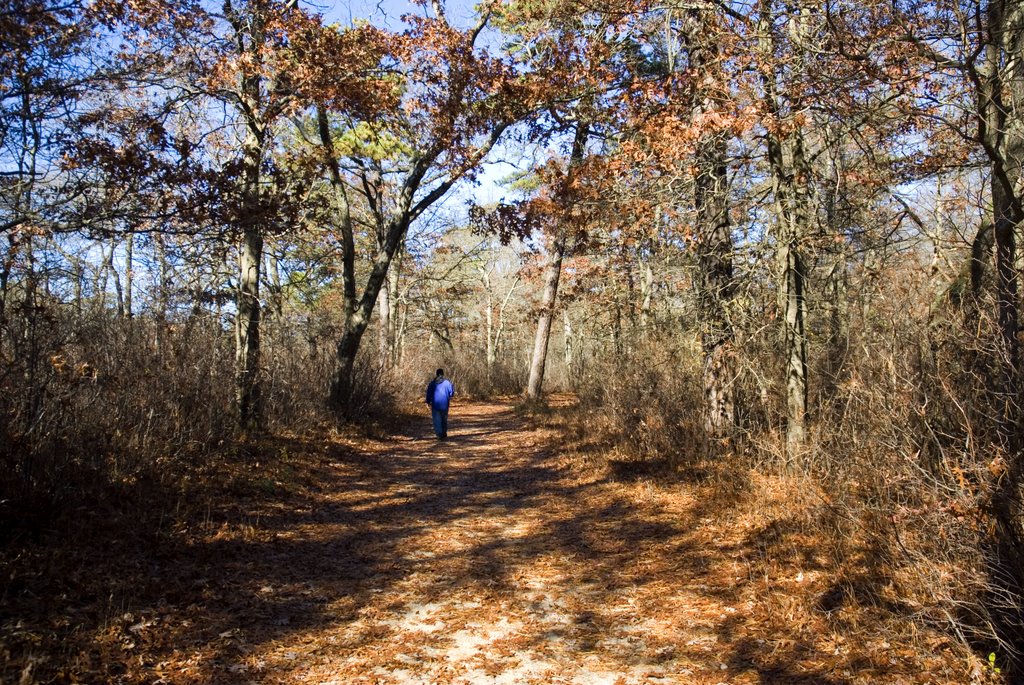
Take a walk in the park....

Photos by Alida Thorpe
Take a walk through
The Connetquot River State Park and Preserve.
...a beautiful experience for all.
It will be a pleasant surprise for those who have never been there.
~~~~~

Sunday, November 12, 2006

Veterans' Day


Photos by Alida Thorpe
Veterans' Day, November 11th.
On the 11th day, of the 11th month at the 11th hour, the treaty to end the fighting was signed to end the first World War.
Armistice Day was renamed Veterans' Day in 1954 to honor all veterans of all wars.
The photo above is the memorial at Bald Hill...to remember our Viet Nam veterans.

Saturday, November 04, 2006

Mild Hurricane Season Brings Record Insurance Profits

Aaron Stein, Long Island Insurance BY AARON STEIN

The past few weeks have brought third quarter earnings reports from some of the major insurance carriers, and it's been interesting. As has been discussed here during our articles about the homeowners insurance situation here on Long Island and elsewhere along the coast, insurance carriers spent the last year and a half going into a very conservative mode, cutting back on their coastal property risk (by cancelling policies in the case of Allstate, Encompass, Vesta Shelby and others) and raising prices.

What has happened is that this ended up being one of the mildest seasons in years for catastrophes such as hurricanes, and so we are seeing reports in the newspapers and financial publications that the companies are showing record profits. Sort of like what happened to the oil companies when prices rose a few months back.

Unfortunately, and maybe rightly so, these record profits will, if the industry is not very careful, create a public relations nightmare. While they are canceling policies and restricting coverages, crying that they need to protect themselves from catastrophe risk, the idea that their shareholders are making tons of money does not seem to be in the best public interest.

In addition, they are not encouraged by tax laws to put this money away for possible future losses, as would seem to make sense. Unfortunately insurance carriers are not allowed to set aside money on a tax-deferred basis for future losses. And we all know that savings, whether it's your personal IRA or other retirement plan, or planning for catastrophes, is driven by the tax code.

One of the parts of the overall future plans to help insurance carriers and the public to deal with the problems in the homeowers and flood insurance areas will be the ability to put money away on a tax-deferred basis to cover possible future losses. This will apply to both insurance carriers and insurance customers.

For the carriers, they would then be able to take some of these record profits and put them away for the inevitable bad year. Unfortunately Congress could not get agreement on this quickly enough to help with the current profits, which would have made for a great opportunity to get started.

This sort of thing will help consumers as well. Right now in the Long Island homeowners insurance market, most people anywhere near the water (and we're talking 3-5 miles here, which includes most of the island) face a deductible on their home insurance policy of anywhere from $5,000 to $20,000 or more. (Most deductibles are in the form of a percentage of the coverage on your house - if you don't understand your coverage, please ask your agent or visit our web site at http://www.nyinsurancewithservice.com/ for contact info and we will explain it to you at no cost or obligation) . One proposal currently being reviewed would allow people to set up tax-deferred savings accounts, similar to an IRA, that would be used to cover that deductible in the event a major storm struck.

As always, for more info please visit our site and/or contact us. Insurance is one of those areas that the public needs to educate itself, because your policy these days can come back to bite you at the time you need it most.

Friday, November 03, 2006

Long Island Pets Need Help

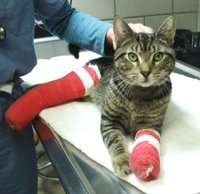
Rex is one of the sweetest, most lovable cats you could ever meet. He greets everyone who visits him in the Bide-A-Wee veterinary clinic with loud purrs, and he happily spends his one-on-one time sitting on the laps of our staff and volunteers. He isn’t even scared by all the activity around him, including when our dogs bark.

Two weeks ago, things did not look so good for Rex, an 18-month-old tabby. He was at a municipal shelter and his time was running out — until Bide-A-Wee stepped in.

Rex was found in the Bronx with two injured legs — his left front and his right hind. His legs had started to heal improperly, and he could barely walk.

Click here to donate now.

When Bide-A-Wee staff visited the local municipal shelter, one of our veterinarians spotted Rex and heard him purring. As the injured cat climbed into her lap, she recommended that we take him and give him a second start. Rex went immediately to the veterinary clinic in Manhattan. After an X-ray confirmed that both of his legs were fractured, Bide-A-Wee staff arranged for an orthopedic surgeon to place casts on Rex’s fractured paws. The casts will help to ensure that his bones heal properly.

Rex is now on six to eight weeks of cage rest, and new X-rays of his paws are taken on a regular basis to check the progress of his healing. When the casts come off, he may also need physical therapy in order to strengthen his legs. It is possible that he will always walk with a limp. However, his charming personality has not been affected, and when he is available for adoption he will make a great companion.

We need your help to offset the cost of Rex’s medical care and to allow us to save other animals like Rex who are waiting at local municipal shelters for their own "Second Start." Please consider making a gift to our Veterinary Medical Assistance Fund (VMAF) or to our Second Start program today.

Click here to donate now.

All of us here at Bide-A-Wee thank you in advance for helping us to help animals in need.

To read more about Bide-A-Wee programs and animals like Rex that need your help, please click here for more information about Bide-A-Wee.

Sincerely,
Ann H. Cohen
Vice President

P.S. If you know people who love cats and dogs as much as we do, please forward this post to them! Thank you so much.


Bide-A-Wee Wantagh, New York
3300 Beltagh Avenue
Wantagh, NY 11793
Adoption Center: (516) 785-4079
Cemetery: (516) 785-6153

Bide-A-Wee Westhampton, New York
118 Old Country Road
Westhampton, NY 11977
Adoption Center: (631) 325-0200
Clinic: (631) 325-0280
Cemetery: (631) 325-0219
Retirement Home: (631) 288-0591

Bide-A-Wee Manhattan
410 East 38th Street
New York, NY 10016
Adoption Center: (212) 532-4455
Clinic: (212) 532-5884
Executive Offices: (212) 532-6395
Donations: (212) 532-6395
Volunteer, Outreach and Bereavement Counseling Information:
(212) 532-4986

Thursday, November 02, 2006

Fire Island in November


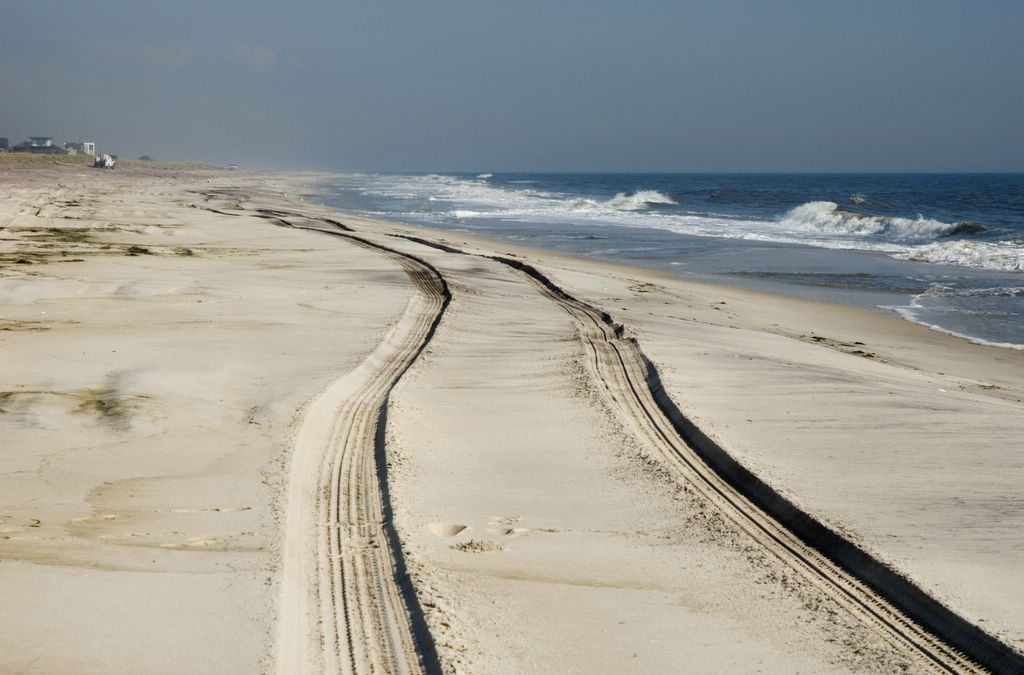
Photos by Alida Thorpe
Fire Island National Seashore
I just had to post another photo. After all, it is November and Halloween is over. I couldn't leave the jack o'lanterns just sitting there!
Yesterday, November 1st, the weather on Long Island was beautiful.
The sun was warm and the breezes, mild.
The photo above was taken on the Fire Island National Seashore.
It was more like spring than autumn!

Tuesday, October 31, 2006

Thursday, October 26, 2006

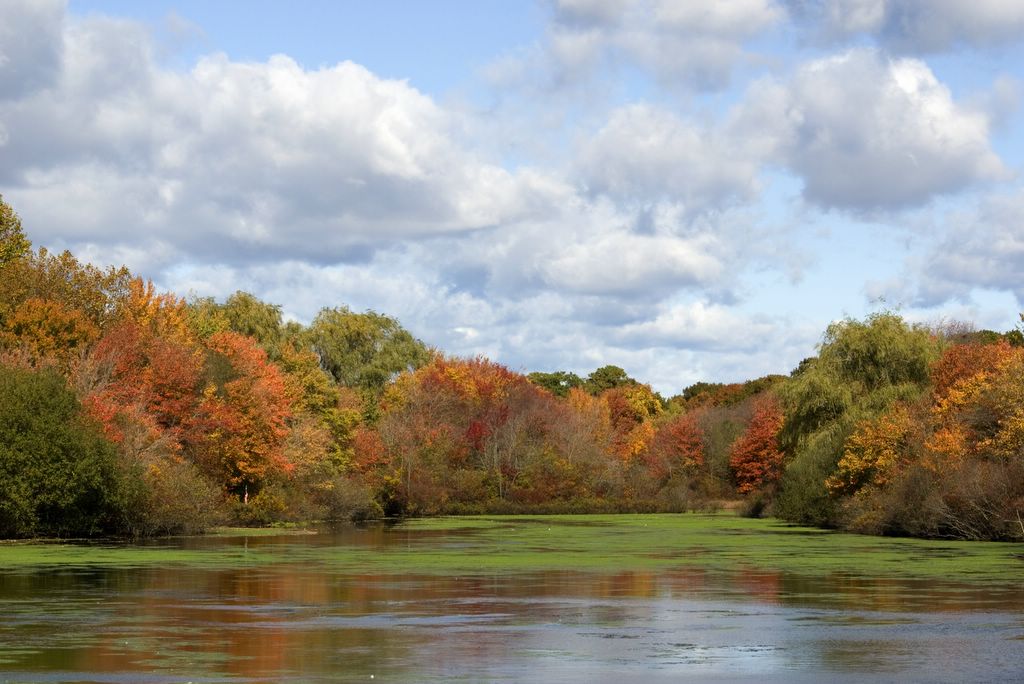
Autumn on Mill Pond

Long Island Photos by Alida Thorpe
Mill Pond, right here on Long Island.
Long Island has reached its full Autumn color this week.
This photo was taken on Wednesday, October 25th, in Sayville.
Sayville is about half-way between New York City and Montauk.
Click on the photo to see it in a larger size.
I hope the wind this weekend doesn't remove the leaves too quickly!

Tuesday, October 24, 2006

Pet Halloween Costumes


Sorry we couldn't resist posting this picture sent from a friend. What is your pet going to be for Halloween?

Saturday, October 21, 2006

Mommy, Where Do Insurance Companies Come From?

Aaron Stein, Long Island Insurance BY AARON STEIN

Hi All. Sorry for the long break between posts. I was away for five days at the annual Rotary International Northeastern U.S. conference, and another five wonderful days visiting Mickey and friends in Florida. Nice to get away but somehow life keeps happening behind your back and likes to spring on you when you come home.

In any event, I thought it would be interesting to write a little about the origins of insurance in general, and homeowners insurance in particular. A lot of people tend to think of insurance as one of those pain-in-the-neck things that the State or their bank makes them buy, but the truth is that a lot of the things we like so much, ownership of property being a big one, driving a car another, would be impossible without some mechanism to spread the risk.

A couple of thousand years ago, people lived in mostly small huts that could be rebuilt with a neighbor's help in a couple of days. And if you lived in a big house, you probably had plenty of money, and slaves to do the re-building if there was a fire or other damage. The concept of insuring something of value started with seagoing trade between nations and continents, and so the field of Marine Insurance was born. Marine insurance is the oldest and probably most interesting of all insurance. It continues today both in the Ocean Marine type as well as Inland Marine which is used to write everything from giant cranes and bulldozers to your diamond engagement ring insured on a rider to your homeowners insurance policy.

Back in the early days of shipping trade along the Mediterranean Sea (thing Ancient Greece), ships started to bring gold, spices, silks, and lots of other interesting stuff from foreign ports of call back to sell in their home areas. After a while, the value of the cargoes carried got so high that the ship owner/captain could not afford the risk to the cargo. Although standard shipping rules even in those days did not make the captain responsible for all losses, even if he was not held accountable, he still might lose all the revenue from the sale of a lost cargo, and that could put him out of business and land him in debtor's prison.

So someone came up with the idea that wealthy merchants could absorb all or a part of the loss that might happen from certain agreed-upon perils such as storm loss, stranding, barratry (fraudulent acts of the captain or crew) or other 'perils of the sea'. In return for their promise to pay a certain amount to the owner of the cargo in case of loss, they received a payment from the owner called a 'premium'. This would be done at the local taverns down near the seaports. A captain would post on a board that he was bringing a certain amount of such and such cargo from a named place, and local merchants and others would write their names under the posting including the amount of risk they were willing to accept. This is the direct beginning of the term 'underwriter', and in a broad way is still the way insurance is transacted by Lloyd's of London, the most famous insurer in the world.

For instance, if someone wants to insure the legs of a famous movie star for $10,000,000, it is presented to Lloyd's or another similar company (Lloyds is actually a group of many syndicated made up of people and organizations with money they would like to invest in this type of insurance). One or more syndicates will step forward and offer to accept all or part of the risk for a certain premium that they calculate. The people who calculate what rates to charge for insurance are called actuaries, and are some of the best math and accounting people on the planet. They make or break the success of insurance companies, and the good ones are very highly paid for their efforts. More next time. Meanwhile, for more info visit our site at http://www.nyinsurancewithservice.com/

Wednesday, October 11, 2006

The North Fork Farms

Long Island Photos by Alida Thorpe

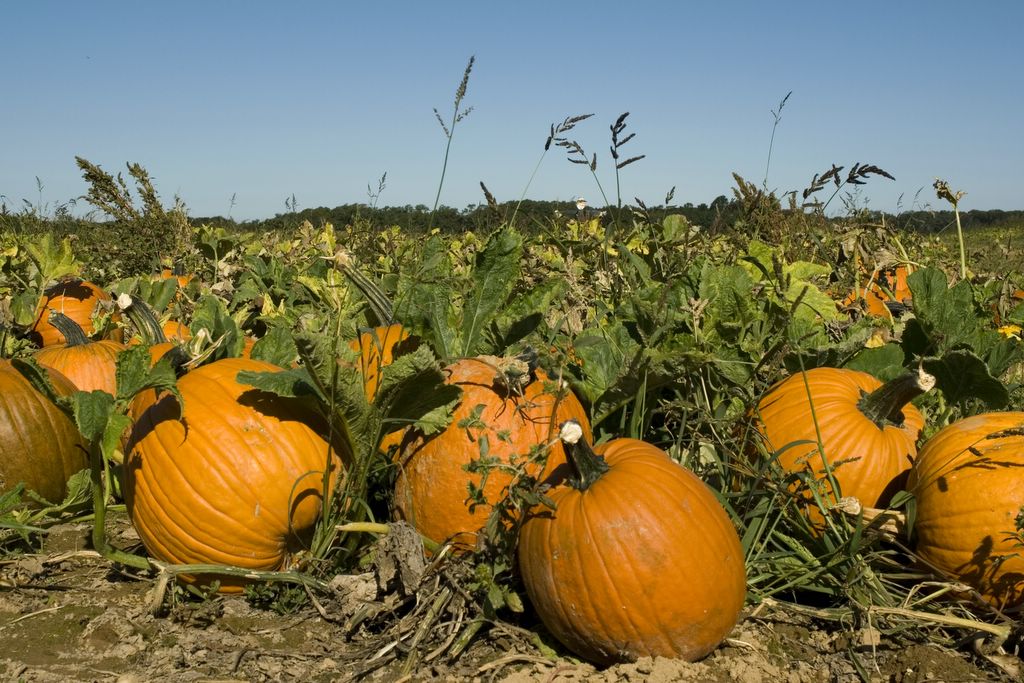
Pumpkin Farm on the North Fork of Long Island.
It's pumpkin time on Long Island's East End.
This is the time to take a drive out east, along the North Fork, and stop at the farm stands and pumpkin fields, and maybe even a winery.
You can buy some fresh flowers and vegetables, as well as pumpkins and local apples.
Enjoy the autumn weather now... the leaves are just changing colors.
Every season on Long Island is special!

Tuesday, October 03, 2006

Less Multi Tasking, Less Stress

Have you ever noticed that when you talk on the phone while driving and are done with the conversation, you get a sense that you don’t even recall where you were driving while on the phone? It’s almost like a blackout while being awake. This is because the brain cannot focus on two simultaneous tasks with completely positive results.

Muti tasking is something that many people do every day. And women even more than men because we are better at it. No offense to the men; it’s just how our brains work. I know most of us cannot imagine how we would do all of the things we have to in a day without multi tasking. I am guilty of doing it many times during the day. But I have recently become more conscious of times when I am trying to do too many things at the same time and I have decided to try and put a stop to it.

Why? Well, it’s part of my mission to slow down my life a bit. Why do I have to cram so much into a day? I don’t. And I’m sure I can get everything done that I need to in a day without so much multi tasking. Besides, slowing down reduces stress and makes life feel more calm and balanced. And doesn’t that sound good to you? Instead of rushed, frazzled, stressed—it’s definitely the better choice.

Now I’m not talking about sitting down and waiting for your load of laundry to finish. There are obvious tasks in life that we can accomplish without sitting there and doing nothing else. I’m talking about simple things. Like when you drive, just drive. Try to cut back on the amount of time you are spending on the phone while in the car. I actually enjoy ignoring the phone while driving. The reason why is because I think it is more important than ever to pay attention when we drive. It’s just too risky with the number of people on the road these days to not give it our full attention. And also because when I talk to someone on the phone, I feel they deserve my full attention. How can I conduct business or listen to a friend’s problem and feel good about giving them my all when half of my attention is on the road?

This is an important reason why we need to cut back on multi tasking—full attention. If we give our full attention to tasks that we are doing, not only will we get them done just as quickly as if we are trying to piggyback another task in between but also that we will do a better job in general. Also, it keeps us in the moment if we give our full attention to the task at hand.

I believe that over multi tasking ends up in a similar result as someone who has ADD. Because our mind is here and there and we are jumping from one thing to another. They are definitely similar.

Just take time during the day to notice when you are multi tasking and how it makes you feel. I am sure there are a lot of you who thrive on the feeling of doing it and enjoy that low level of stress it causes. But it can also cause bigger stresses and interfere with a more balanced life. Whenever I catch myself trying to do too much at once, I force myself to slow down. One thing at a time, I remind myself. Because each thing I do deserves my full attention and my best ability in order for me to be the best person I can be. Give it a try and see how it feels to slow down. You might just find that you like it!

Friday, September 29, 2006

Monach Butterflies

Long Island Photos by Alida Thorpe
Monach Butterflies are migrating through and over Long Island at this time, every year.
Have you seen them? Probably, since they are so numerous, and colorful, and seem to be flying everywhere.
Did you notice that they all seem to be going in the same direction?
The next time you see one, watch where he goes. See if his fellow travelers follow.
He may stop for a snack on a local plant and then move on.
For more information about these beautiful butterflies, click here.